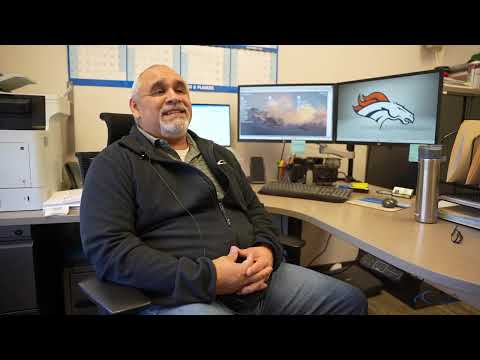
In frac sand hauling, there’s not a lot of margin, so the gains have to come from efficiency. G&Z Transport, a short-run frac sand and dry bulk carrier in Brighton, Colorado, cut seven or eight support positions after moving to an all-in-one system. We spoke with financial analyst Albert Nava about the Axon launch, integrated reporting, faster invoicing, and Axon’s pricing model.
Q&A
Tell us about yourself and the company.
My name is Albert Nava. I am the financial analyst here at G&Z Transport in Brighton, Colorado.
The current owners purchased the company from the owner’s wife’s father. I can’t tell you exactly how long the company’s been in business. I’ve been here for two and a half years, and I’ve spoken to some of the other employees who’ve been here up to ten years, so it’s been here at least that long.
It’s a specialized industry that we’re in. About 80 percent of what we do is transporting frac sand out to the frac sites, so we are heavily dependent on the natural gas and oil business to keep things going. About 20 percent of our business is other dry aggregate and bulk. We don’t do any OTR hauling. It’s all short-run. We’re at 85 trucks right now.
When did you start using Axon, and how did the launch go?
We started using Axon in October of ’24. We got a lot of great support on onboarding. It was probably the best launch that I’ve ever done. With a couple of other past companies, I’ve done new software launches and run into downtime and other issues. The Axon launch was perfect. We rolled right into it, everybody started working the next day, and we haven’t experienced any issues with it.
What problems is Axon solving that your old software couldn't?
It’s an all-in-one software package, so I’m not running reports or working through issues across multiple pieces of software. Before, our TMS software would shoot information out to QuickBooks, and I’d also be trying to pull information out of our shop software to create the mini P&Ls for the equipment. Now we’re getting better reporting out of it.
Our old shop software allowed us to import fuel data. The difference now is that I don’t have to pull it from a third-party system, bring it into my reporting software, and then create those reports. It just makes life easier. In this industry, there’s not a lot of margin and not a lot of ways to get better rates, so you’ve got to be better in the margins. You’ve got to be more productive. Axon allows us to do things quicker and get to that information more easily, so we’re more efficient, because that’s the only place you can really increase your revenue.
How has a fully integrated system helped with your receivables?
It’s fantastic as far as that’s concerned. Everything is there at my fingertips. I can run those reports and see things as they’re happening, and check financials on a daily basis without doing any imports or exports.
Having an integrated package is a double-edged sword, though. If there’s a mistake made on the front end and it isn’t caught right away, it follows everything all the way through to the back end. That can cause a couple of issues, but if you’re diligent, it doesn’t happen all that often.
How has Axon changed your invoicing?
We invoice on a daily basis, so whatever happened yesterday gets invoiced today. We haven’t had any issues with that. It’s been a pretty streamlined process. The billers are doing a great job.
In our old software, it was a three-step process. The dispatchers would dispatch the loads and do an initial review when they came back. Then they would pass them to a review team that had to go through every load and make sure everything was correct. Then the loads would go to the billers to get invoiced and out to the customer. It sometimes took two, maybe three days for a load to get through the system. Since more people had to do the work, it was not as streamlined as Axon is.
How has Axon helped you with staffing?
We have definitely become more efficient with Axon. We’ve got to get better in those margins, so as far as office staff is concerned, the support staff has been reduced by seven or eight positions.
Due to Axon’s ability to make us more efficient, we’ve been able to reduce our dispatch staff as well as eliminate our review staff in total. We don’t have to dispatch all the loads in two different pieces of software anymore. We do it in a single software and then do the import. The loads go directly to the billers now, so they’re able to get that work done more efficiently and quicker.
The biggest piece Axon was able to help us with is importing all of our loads that run through a third-party software program mandated by our largest vendor. Now our drivers are not working in two apps. They’re working in a single app, and we’re able to pull that information in, so it’s making the drivers more efficient, too.
If you grew back to 150 trucks, would you need more staff?
No, because we were at 150 trucks with the same staff. Our truck count has gone down, and that has nothing to do with Axon. It’s just the industry, the way it changes and shifts. The amount of available work for us has gone down over the last couple of years, and we have the flexibility to run fewer trucks and continue to drive revenue as best we can.
We can see that it’s going to turn within the next couple of months. We know that turn is coming, and it’s better to keep people on staff than to have to hire and retrain. It’s cheaper.
How do your owner/operators like their settlements?
It’s fantastic, because at the time we’re creating the settlements, the reports go out to them, so they’re able to see those. There’s a two-week delay before we pay them, so they have a two-week opportunity after the settlement has been generated to dispute anything or make any required changes. That way, when they get paid, they’re getting paid accurately.
Our in-house drivers’ settlements are fairly accurate, because we have people monitoring all of those things. The independent contractors are going to ask more questions and maybe dispute a couple of things here and there more often. It’s not something that happens on a common basis, but when it does, we’re able to go back, make whatever adjustments we need, and make sure everybody’s paid appropriately.
How do you like reporting in Axon?
The canned reporting is nice. I’m able to do quite a bit with those, and it also has the ability for me to build some custom reports, which is also great.
Do you think Axon has paid for itself?
I would say within the first year. We’ve recouped everything that we paid for implementation.
As far as a pricing model, Axon is absolutely the best. It’s a user-based pricing model, as opposed to most TMS software that wants to bill you by the truck or by the load, which is basically punishing you for growth. That’s the biggest part that we like about Axon. As we get more efficient, we can make more and spend less.
If someone in the industry asked about your experience with Axon, what would you say?
It’s a fantastic little piece of software. The stuff that I have issues with is because I’m really, really good at what I do, and I can do more things than most administrators can. I like to build custom reports and set up a specific order of operations, but that’s just me being nitpicky because of who I am.